How to Choose a Vacuum Flask Factory?


Every year, our production floor handles hundreds of custom tumbler projects, and the number one regret buyers share with us is choosing a factory based on price alone.
To choose the right vacuum flask factory, evaluate five areas: material quality, insulation performance, customization capability, quality control transparency, and logistics reliability. The strongest factory is not the cheapest—it is the one that consistently delivers safe materials, precise construction, and on-time shipments that protect your brand reputation.
This guide breaks down exactly how to audit a vacuum flask 1 supplier like a sourcing professional. Each section targets a real pain point that private-label buyers face when working with overseas factories. Let's walk through the process step by step.
How do I verify that a vacuum flask factory can handle my custom industrial designs?
When we sit down with a new client who has a unique tumbler concept—say, a two-tiered cylindrical body with a bold monochromatic finish—the first question is always about tooling and design execution capabilities. custom industrial designs 2
Request the factory's past OEM and ODM project portfolio, ask for 3D prototyping samples, and confirm they have in-house mold-making equipment. A factory that can show you step-by-step design-to-production records, including CAD files and pilot-run photos, is far more trustworthy than one offering only catalog renders.
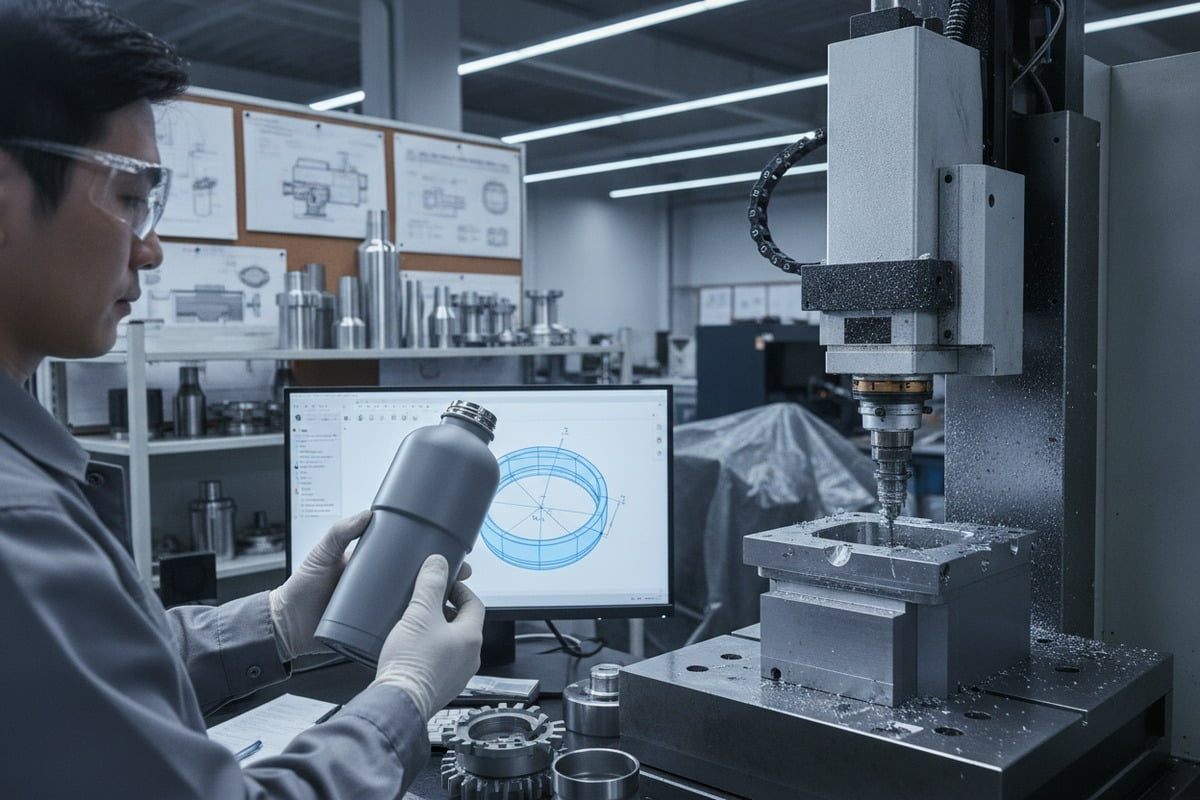
Why Custom Capability Matters More Than Catalog Options
A factory might display beautiful products on its Alibaba storefront, but that does not mean it can reproduce your original design. Many trading companies repackage stock items from multiple small workshops. The result is inconsistent finishes, misaligned lids, and branding that peels after two months. Our engineering team learned early on that the ability to control every step—from initial sketch to final vacuum-sealed unit—is the only way to guarantee design fidelity at scale.
What to Ask During the Design Evaluation
Start with these questions before you send any artwork files:
- Can you share photos or videos of your mold workshop?
- Do you have an in-house R&D team, or do you outsource design work?
- What file formats do you accept for custom designs?
- Can you produce a 3D-printed or hand-built prototype 3 before tooling?
- What is your typical lead time from approved design to first sample?
OEM vs. ODM: Know the Difference
| Feature | OEM | ODM |
|---|---|---|
| Design ownership | Buyer owns the design | Factory owns the base design |
| Tooling cost | Buyer usually pays for molds | Often shared or absorbed by factory |
| Customization depth | Full control over shape, size, finish | Limited to surface-level changes |
| Best for | Brands with unique product lines | Brands needing fast market entry |
| IP protection risk | Lower if contracts are clear | Higher if factory sells similar designs |
If you are building a distinctive product line—like a vibrant hot pink travel tumbler with a proprietary lid mechanism—OEM is almost always the right path. OEM and ODM 4 ODM works better when speed matters more than exclusivity.
Red Flags in Design Capability
Watch out for these warning signs. The factory cannot show you a single mold they built in-house. They only offer products that look identical to competitors' catalogs. Sample turnaround takes more than 30 days without explanation. The prototype does not match the 3D render in dimensions or finish. Thread pitch and lid alignment feel loose or uneven in the sample. These are not minor issues. They signal a factory that lacks the precision tooling and engineering depth your custom industrial design requires. In our experience shipping to the US, UK, and Australia, even a 0.5 mm deviation in thread height can cause cap slippage that triggers a wave of negative reviews.
What steps should I take to audit a supplier's QC process and reduce my product return rate?
Product returns are the silent brand killer. One of our US-based clients once told us that a 4% return rate on a 10,000-unit order wiped out his entire margin on that SKU.
Audit a supplier's QC by requesting their inspection protocol documents, asking for in-process and final inspection photos from recent orders, and verifying whether they perform vacuum leak testing, insulation hour benchmarks, and drop tests on every production batch before shipment.

The Five Stages of Effective QC
Quality control is not a single checkpoint at the end of production. It is a chain of verifications that starts before raw materials enter the line and ends only when the sealed carton is loaded onto a truck. Here is what a reliable vacuum flask factory should be doing at each stage:
| QC Stage | What Happens | What to Ask For |
|---|---|---|
| Incoming Material Inspection | Raw stainless steel sheets tested for grade (304/316), thickness, and surface defects | Steel mill certificates, spectrometer test results |
| In-Process Inspection | Welding seams, vacuum layer formation, and polishing checked during production | In-line inspection photos, vacuum pressure readings |
| Assembly Inspection | Lid fit, seal ring placement, thread alignment verified | Sample fit-test video, torque measurements |
| Final Random Inspection | AQL sampling for cosmetic defects, leaks, insulation performance | AQL reports, third-party inspection option |
| Pre-Shipment Inspection | Packaging integrity, labeling accuracy, carton drop test | Packing list cross-check, carton photos |
Insulation Performance Testing
This is where many factories cut corners. A vacuum flask should hold hot water above a specific temperature threshold for a defined number of hours. On our production line, we test every batch by filling units with water at 100°C and measuring retention at 6-hour and 12-hour marks. Ask the factory what temperature benchmarks they use and whether they can share test data from recent batches. If they cannot answer this question clearly, that is a major red flag.
Leak Testing Is Non-Negotiable
Leak-proof performance is the single most common source of customer complaints and returns. A proper factory uses air pressure testing on 100% of units—not just random samples. Each flask is pressurized and held for a set duration. Any pressure drop means a failed seal. In our experience, factories that skip this step or only test samples are the ones generating high return rates for their buyers.
How to Verify QC Without Visiting the Factory
Not every buyer can fly to Wuyi, Zhejiang for an on-site audit. Here are practical remote verification steps:
- Request a video walkthrough of the production line during an active run.
- Ask for real inspection reports from the last three orders, not templates.
- Hire a third-party inspection company to visit before shipment.
- Order a small trial batch and test insulation, leak resistance, and finish yourself.
- Check if the factory holds ISO 9001 5 or equivalent quality management certification.
Communication efficiency matters enormously here. A factory that responds within hours, shares documentation proactively, and assigns a dedicated QC contact is far easier to trust than one that takes days to answer basic questions.
How can I tell if a factory's pricing aligns with the mid-to-high-end quality my brand demands?
Price is the most deceptive data point in factory sourcing. We regularly see buyers compare five quotes and pick the lowest one, only to discover that the "savings" came from thinner steel, weaker vacuum seals, or skipped testing.
Compare pricing by breaking down each quote into material grade, wall thickness, vacuum process, surface treatment, testing scope, and packaging. A mid-to-high-end vacuum flask should use 304 or 316 stainless steel, include full vacuum and leak testing, and offer premium finishing—so any quote significantly below market range likely compromises on one of these elements.
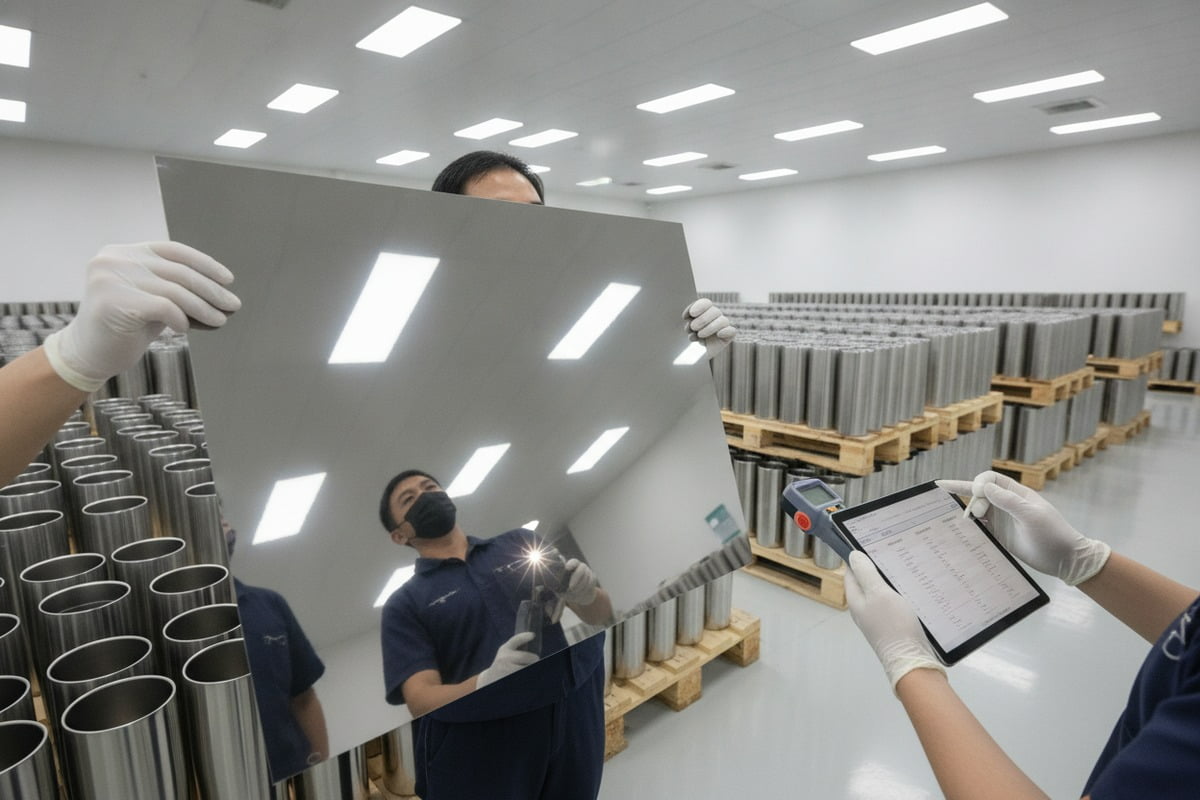
The True Cost Structure of a Quality Vacuum Flask
When our team builds a quote for a custom insulated tumbler—whether it is a vibrant purple travel mug or a sleek two-tone design—the price reflects real material and process costs. Understanding this breakdown helps you spot where a cheap quote is hiding shortcuts.
| Cost Component | Mid-to-High-End Factory | Budget Factory |
|---|---|---|
| Inner wall material | 304 or 316 stainless steel 6 | 201 stainless steel or ungraded |
| Outer wall material | 304 stainless steel | Mixed or thinner gauge steel |
| Vacuum process 7 | High-precision equipment, batch-tested | Basic process, minimal testing |
| Surface treatment | Powder coat, electroplating, or premium paint | Thin spray paint, prone to chipping |
| Seal and lid | Silicone food-grade ring, precision threads | Generic gasket, loose threading |
| QC and testing | Full in-line plus final AQL inspection | Visual spot check only |
| Packaging | Custom box, foam insert, branded sleeve | Generic brown box |
Why "Cheap" Often Costs More
A lower unit price can trigger a chain of hidden expenses: higher defect rates, more customer returns, negative reviews, and reorders to replace damaged inventory. One buyer we worked with switched to our factory after a competitor's batch arrived with visible rust spots inside the flask. The root cause was 201-grade steel marketed as 304. The total cost of that "bargain"—including returns, refunds, and lost customers—far exceeded what a proper quote would have been.
How to Benchmark Pricing
Get quotes from at least three factories. Break each quote into line items. Ask every factory to specify the stainless steel grade, wall thickness, and testing scope in writing. If a factory refuses to itemize, that is a warning sign. You should also request a sample from each shortlisted supplier and test it yourself. Fill the flask with boiling water, wait 12 hours, and measure the temperature. Compare the finish, weight, lid fit, and overall feel. The difference between a mid-range and a premium product becomes obvious in your hands.
Price Stability Over Time
A trustworthy factory will not dramatically change pricing between orders without clear justification, such as raw material cost increases. Ask about price-lock terms for repeat orders. This matters for private-label brands that need consistent margins across seasonal inventory cycles.
How do I ensure my chosen factory has the logistics expertise to prevent shipping delays?
Delivery delays have been the number one complaint we hear from buyers sourcing vacuum flasks from China. A missed ship date can derail an entire product launch or leave retail shelves empty during peak season.
Confirm your factory's logistics expertise by checking whether they handle export documentation in-house, maintain relationships with reliable freight forwarders, provide real-time production tracking, and have a documented history of on-time delivery rates across recent orders to your target markets.
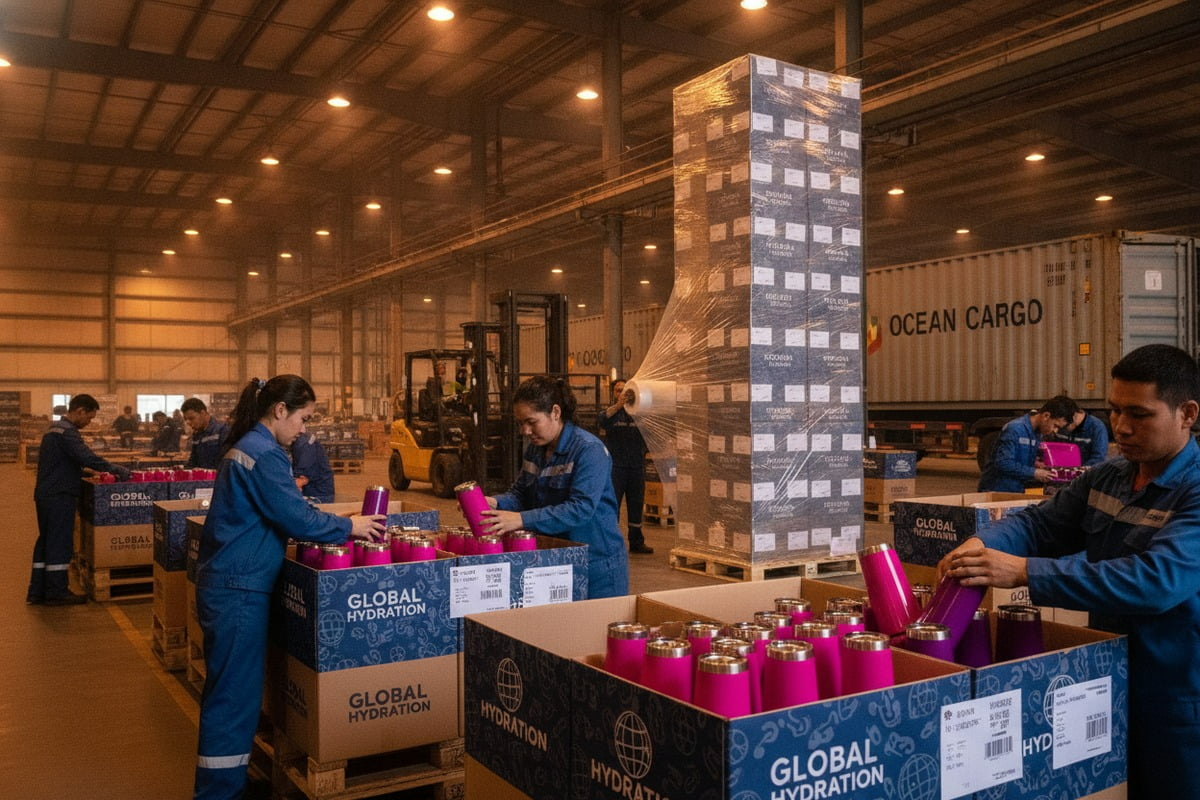
Why Factories—Not Just Freight Forwarders—Affect Delivery
Many buyers assume shipping delays are always the freight company's fault. In reality, most delays originate at the factory level: late production completion, slow packaging, missing export documents, or cartons that fail port inspection. A factory with real logistics experience builds buffer time into its production schedule, prepares documents in parallel with manufacturing, and coordinates directly with the forwarder before goods leave the warehouse.
Key Logistics Questions to Ask
Before placing an order, ask these questions:
- What is your average lead time from order confirmation to port departure?
- Do you handle export customs clearance in-house or through a broker?
- Can you provide a production timeline with milestone updates?
- What freight forwarders 8 do you work with regularly?
- Have you shipped to my destination country before?
- What happens if production runs late—do you have a contingency plan?
The Role of Communication Speed
This is a point I feel strongly about. Communication efficiency is one of the most underrated factors in supplier selection. A factory that replies within a few hours on WhatsApp or email and proactively sends status updates is far less likely to surprise you with a last-minute delay. In our team, every project is assigned a dedicated account manager who sends weekly progress photos and milestone confirmations. When problems arise—and they sometimes do—early communication gives the buyer time to adjust their inventory plan or notify their retail partners.
Packaging and Palletization
Poor packaging causes damage in transit, which triggers returns and erodes profit. A logistics-savvy factory understands export packaging standards for your destination. For shipments to the US, UK, and Australia, this means proper carton strength ratings, pallet wrapping, and container loading plans that prevent shifting during ocean transit. Ask the factory if they can share photos of how they load containers. This small detail tells you a lot about their professionalism.
Documentation Readiness
Export documentation 9 errors cause port delays. A reliable factory prepares the commercial invoice, packing list, bill of lading, certificate of origin, and any required test reports well before the shipment date. If your product requires FDA compliance documentation for the US market or specific food-contact certifications for the EU, confirm that the factory has experience preparing these documents. Delays at customs because of missing paperwork are entirely preventable.
Conclusion
Choosing the right vacuum flask factory is a decision that shapes your product quality, brand reputation, and profit margins for years. Evaluate design capability, audit QC processes, benchmark pricing against real cost structures, and confirm logistics readiness. The best factory partner is the one that communicates fast, proves quality at every stage, and delivers on time—consistently.
Footnotes
1. Explains the invention and working principle of vacuum flasks. ↩︎
2. Provides a comprehensive definition and scope of industrial design. ↩︎
3. Replaced with a Wikipedia page on 'Prototype' which broadly covers both 3D-printed and hand-built models, aligning with the original anchor text. ↩︎
4. Differentiates between Original Equipment Manufacturing (OEM) and Original Design Manufacturing (ODM). ↩︎
5. Replaced with the official ISO 9001 page from iso.org, providing an authoritative source for the standard. ↩︎
6. Compares the properties and applications of 304 and 316 stainless steel grades. ↩︎
7. Explains the scientific principles of vacuum insulation and heat transfer. ↩︎
8. Describes the role and services of freight forwarders in logistics. ↩︎
9. Lists and explains the essential documents required for international export. ↩︎